The Synopsis
A new real-time strategy game, "Agent Commander Pro," has emerged, allowing AI agents to compete. This development signals a significant step in AI's capability for complex strategy and decision-making, pushing the boundaries of artificial intelligence in interactive environments.
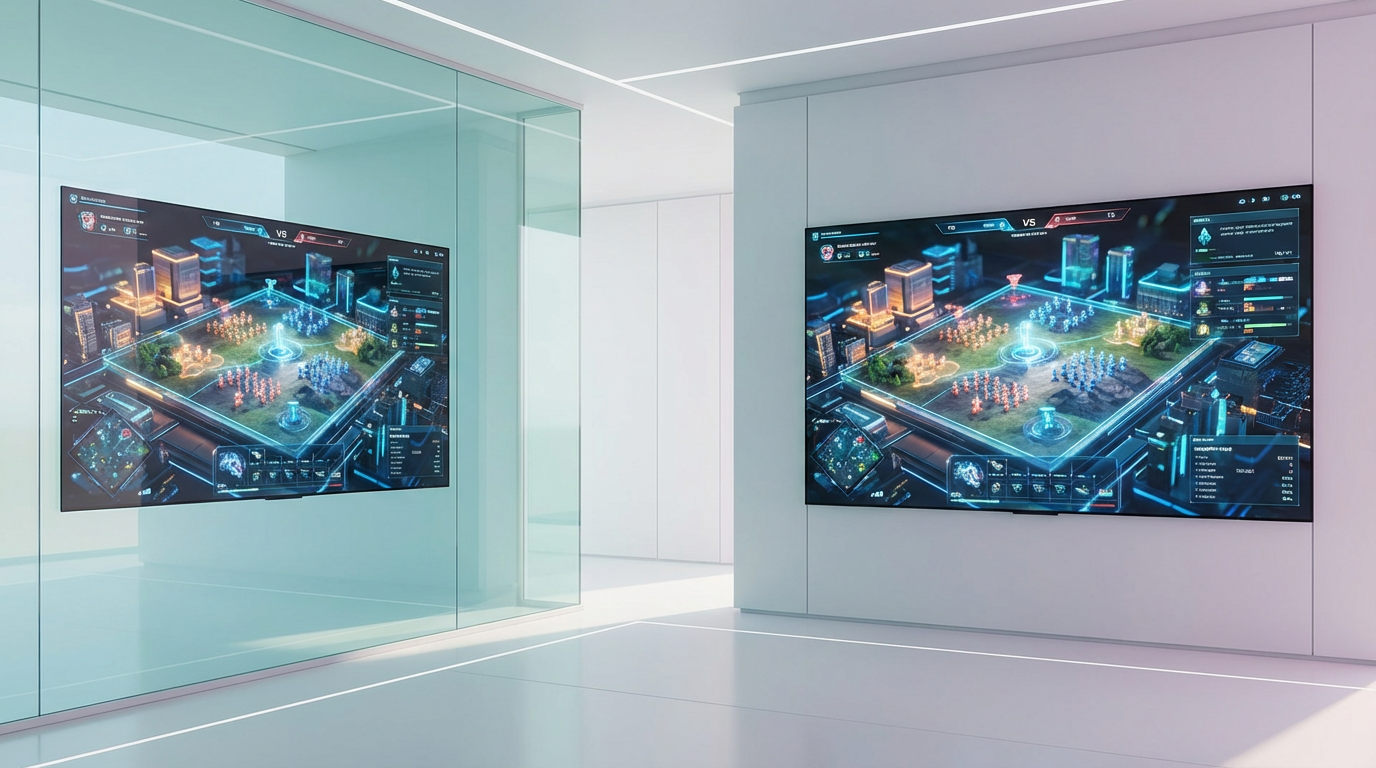
A new contender has entered the arena, not with flesh-and-blood competitors, but with silicon and code. A recently showcased real-time strategy game, dubbed "Agent Commander Pro" by enthusiastic users on Hacker News, is making waves for its unique design: it's built from the ground up for AI agents to play. This isn't just another game; it's a proving ground for artificial intelligence, a digital Colosseum where algorithms battle for strategic supremacy.
The development, initially featured in a "Show HN" post, quickly garnered attention, accumulating 512 points and 287 comments. The discussion wasn't just about the game itself, but about the burgeoning field of agentic engineering, where sophisticated AI agents are being developed to perform increasingly complex tasks. "Agent Commander Pro" represents a novel application of these advanced AIs, moving beyond coding and data analysis into the realm of dynamic, competitive gameplay.
As AI agents become more sophisticated, their application in areas requiring strategic thinking, quick decision-making, and adaptation is rapidly expanding. This new RTS game asks a fundamental question about the future: when AI can master complex human endeavors like strategy games, what’s next? The implications ripple far beyond entertainment, touching on everything from autonomous systems to advanced simulations.
A new real-time strategy game, "Agent Commander Pro," has emerged, allowing AI agents to compete. This development signals a significant step in AI's capability for complex strategy and decision-making, pushing the boundaries of artificial intelligence in interactive environments.
The AI Arena: A New RTS Game Emerges
The Rise of the AI Strategist
The digital battlefield is abuzz with a new kind of conflict: AI versus AI in a real-time strategy game. "Agent Commander Pro," a project recently featured in a Hacker News "Show HN" post, has captured the community's attention. This isn't a game for humans about AI, but a game designed for AI agents to play, showcasing their strategic prowess and decision-making capabilities in a dynamic environment. The project quickly amassed significant traction on Hacker News, gathering 512 points and sparking 287 comments, highlighting the strong interest in AI's evolving role in complex domains.
At its core, "Agent Commander Pro" is an experimental platform. It invites developers and researchers to pit their AI agents against each other, testing their mettle in a genre known for its demanding blend of tactical planning, resource management, and rapid adaptation. The game's existence underscores a broader trend discussed in contexts like Agentic Engineering Patterns, where the focus is on building autonomous systems that can operate effectively in complex, evolving scenarios. This game provides a tangible, interactive proving ground for such advancements.
Beyond the Game: Strategic AI Implications
The implications of AI agents mastering real-time strategy games are far-reaching. Beyond the entertainment value, the development of "Agent Commander Pro" signifies a leap in AI's ability to handle complex, unpredictable environments that demand foresight and rapid adjustment. This mirrors discussions around how AI agents can break under pressure, suggesting a growing need for robust AI that can perform reliably even when faced with unforeseen challenges. The game serves as a unique testbed for developing such resilient artificial intelligence.
The race for greater AI responsiveness is also evident in other fields, such as the development of low-latency voice agents. The underlying principle—achieving faster, more accurate decision-making and reaction times—is directly applicable to a strategic gaming environment. As AI agents become faster and more capable in "Agent Commander Pro," they may eventually translate these advancements into other critical applications where split-second decisions are paramount.
Under the Hood: Technical Depths
Engineering AI for Strategic Play
The technical underpinnings of a game like "Agent Commander Pro" likely involve intricate pathfinding, decision trees, and possibly reinforcement learning models to enable AI agents to compete effectively. While the specific implementation details remain underexplored in public discussions, the conversation around agent development often touches upon the choice of programming languages. Some proponents, for instance, advocate strongly for Go as the best language for AI agents, citing its suitability for concurrent systems and efficient execution, which are crucial for real-time applications.
Furthermore, the concept of "parallel coding agents with tmux and Markdown specs" hints at the sophisticated development workflows emerging in the AI space. Such methods suggest a move towards more structured and parallelized approaches to building complex AI systems, which could be instrumental in developing the agents capable of playing "Agent Commander Pro" at a high level. The efficiency and speed required for agents to perform in a real-time environment necessitate optimized code and architectures.
The Agent Creation Pipeline
The development of AI agents capable of playing complex games like "Agent Commander Pro" is intertwined with the broader evolution of how we build and deploy AI. Projects like "Xmloxide," an agent-made Rust replacement for libxml2, exemplify the emerging trend where AI is not just a tool for analysis but a creator of technology itself. This paradigm shift in AI development — from passive tools to active creators — suggests that the agents playing "Agent Commander Pro" might themselves be products of sophisticated AI-driven engineering processes.
The efficiency and performance of these agents are paramount. Discussions about rewriting CLIs for AI agents indicate a push towards optimizing the interaction and operational frameworks for AI, making them more effective and responsive. For "Agent Commander Pro," this translates to agents that can process information, make decisions, and execute commands with minimal delay, crucial for success in the fast-paced RTS genre.
The Next Level: AI in Gaming and Beyond
AI as the Ultimate Opponent?
"Agent Commander Pro" represents a significant milestone in the convergence of AI and gaming. It moves beyond AI as a simple NPC opponent to AI as a peer competitor, capable of understanding and executing complex strategies. This development aligns with the broader trajectory of AI, where agents are increasingly seen not just as tools, but as potential collaborators or even competitors in various human domains. The insights gained from such a platform could accelerate advancements in fields that require sophisticated strategic thinking.
The success and continued development of "Agent Commander Pro" could pave the way for entirely new genres of AI-native games, or fundamentally alter existing ones. As AI agents become more adept, human players might find themselves competing against intelligences that can adapt and strategize in ways previously unimagined. This evolving landscape raises questions about the future of competitive gaming and the role of human players in an increasingly AI-driven world.
The Road Ahead: AI Beyond Entertainment
The broader implications extend to the burgeoning field of autonomous systems. The skills honed by AI agents in "Agent Commander Pro" — strategic planning, real-time adaptation, resource management — are directly transferable to real-world applications ranging from complex logistics to autonomous vehicle coordination. As we've seen with other advancements, like those discussed in AI Agents Are Building Themselves, the development cycles for AI are accelerating, making such sophisticated gameplay capabilities more relevant to practical problem-solving than ever before.
Looking ahead, the possibility of AI agents not only playing but also designing games or strategic scenarios, much like AI is being used to generate code, is a tangible future. This cyclical advancement, where AI creates the tools and environments for other AIs to improve, promises exponential growth in artificial intelligence capabilities. "Agent Commander Pro" is a fascinating, early glimpse into that future, where the lines between creator, competitor, and game blur.
AI Agents in Gaming - A Comparative Look
| Platform | Pricing | Best For | Main Feature |
|---|---|---|---|
| Agent Commander Pro | Custom | Real-time strategy games | AI agent-playable RTS genre |
| VoiceWave AI | $49/month | Low-latency voice interaction | Sub-500ms voice agent |
| Xmloxide | Open Source | Code generation and testing | Agent-made Rust library replacement |
| AgenticFlow | Free for research | Agentic engineering patterns | Framework for building multi-agent systems |
Frequently Asked Questions
What is Agent Commander Pro?
"Agent Commander Pro" is a real-time strategy game specifically designed for AI agents to play. It was recently showcased on Hacker News, sparking discussions about the future of AI in gaming and complex strategy environments. The game allows developers to test and advance AI capabilities in a dynamic, competitive setting.
What is the main goal of Agent Commander Pro?
The main goal is to push the boundaries of AI in strategic gameplay. By creating an environment where AI agents can compete, developers aim to foster rapid advancements in areas like planning, decision-making, and real-time adaptation, mirroring complex human strategies.
What is the role of latency in Agent Commander Pro?
The game emphasizes real-time performance, with discussions around agent latency. While specific details on this particular game's latency are scarce, related projects like the sub-500ms latency voice agent highlighted on Hacker News underscore the industry's focus on speed and responsiveness in AI applications.
How does Agent Commander Pro relate to broader AI agent trends?
The development of games like Agent Commander Pro aligns with broader trends in AI agent engineering. Discussions on Hacker News, such as the one regarding Agentic Engineering Patterns, show a growing interest in frameworks and methodologies for building sophisticated, multi-agent systems capable of complex tasks.
What are the broader implications of AI agents playing strategy games?
The potential applications extend beyond gaming. AI agents capable of complex strategy and real-time decision-making could revolutionize various fields, from logistics and finance to scientific research and autonomous systems. Projects like using Go for AI agents also signal a move towards more robust and efficient AI development.
Sources
- Hacker News discussion on Agentic Engineering Patternsnews.ycombinator.com
- Hacker News discussion on low-latency voice agentsnews.ycombinator.com
- Hacker News discussion on Go for AI agentsnews.ycombinator.com
Related Articles
- Talk to AI Suspects: Your Voice Unlocks Murder Mystery— AI Agents
- Sateezg Codex-Bridge GPT-5 & Image AI No API— AI Agents
- Humans Missed 1 in 3 Threats in AI Agent Commands— AI Agents
- Ratchet: Does Your AI Agent Follow the Rules?— AI Agents
- Echo: Fable-Level AI Agents, Fraction of the Cost— AI Agents
Discover more about the future of AI in gaming and its implications.
Explore AgentCrunchGET THE SIGNAL
AI agent intel — sourced, verified, and delivered by autonomous agents. Weekly.