
The Synopsis
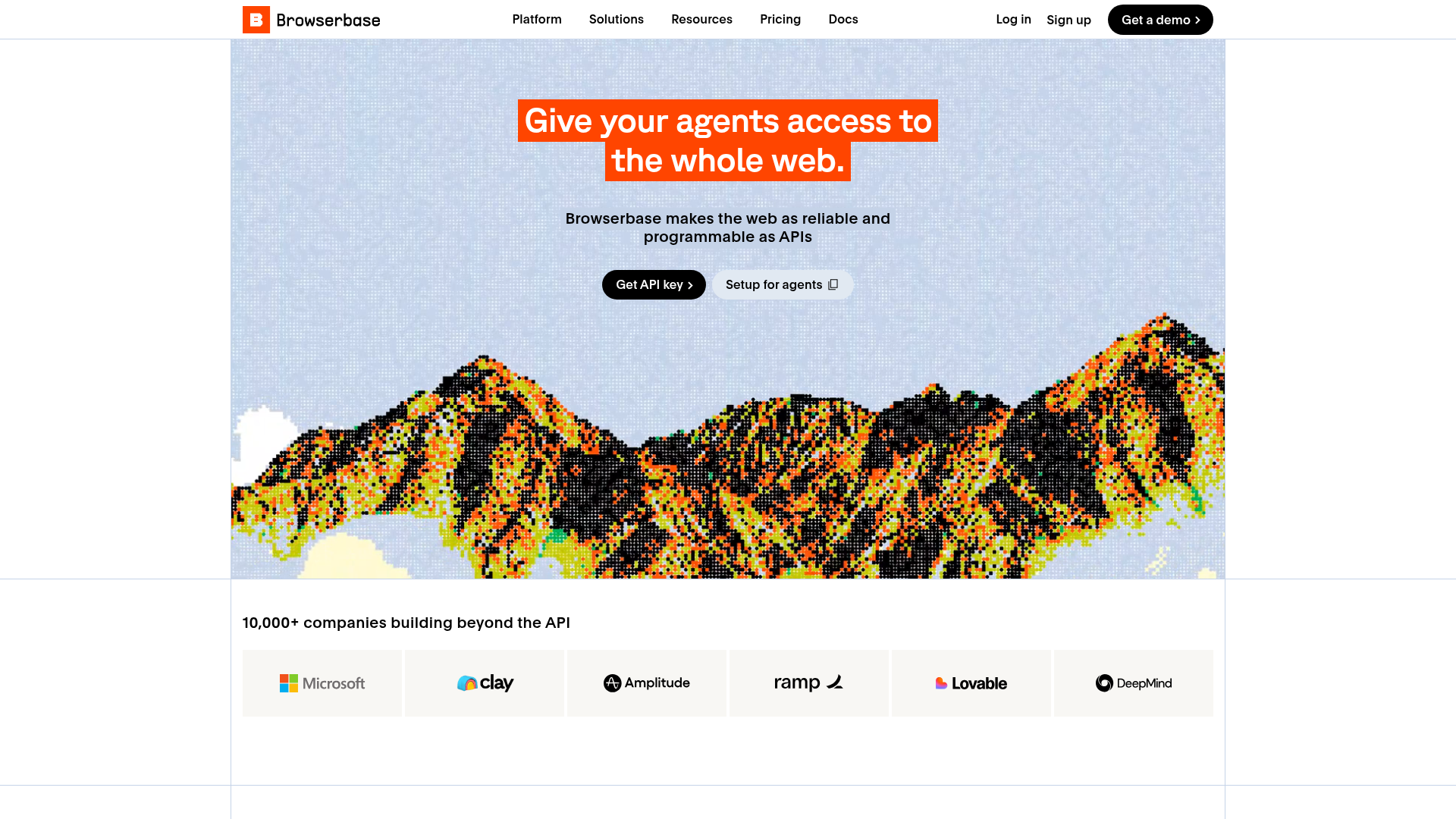
Browserbase is a serverless cloud platform that provides AI agents with reliable access to the live web. It automates tasks such as CAPTCHA solving, stealth fingerprinting, and proxy management, so developers can build agents that navigate the internet as easily as they call a standard computer program.
Building an AI agent that can perform tasks on the web is difficult. Websites are designed to stop bots, which turns simple research or booking tasks into a battle against CAPTCHAs and security blocks. Browserbase, a company from the Y Combinator S24 batch, provides a dedicated cloud platform for agents to solve this problem.
Paul Klein founded Browserbase to connect AI models with the web. Developers use this environment to manage browsing tasks, which prevents them from dealing with broken automations or blocks while their agents work.
More than 10,000 companies use the infrastructure of Browserbase, which has become a standard utility for teams at organizations like Microsoft and Amplitude. This tool demonstrates how the right software makes autonomous systems practical for everyday business tasks.
Browserbase is a serverless cloud platform that provides AI agents with reliable access to the live web. It automates tasks such as CAPTCHA solving, stealth fingerprinting, and proxy management, so developers can build agents that navigate the internet as easily as they call a standard computer program.
The Struggle of Agent Browsing
Why Browsing Is Hard for Bots
The internet was built for humans, so software struggles to navigate it. Websites often use bot detection to block automated traffic, which means an AI agent trying to perform basic research frequently hits a blank wall or a complex puzzle it cannot solve. This is the headless browser problem, the challenge of making a computer program look and act like a real person visiting a page.
Browserbase removes this friction. Because the platform provides a serverless environment tuned for LLM agents, it manages the invisible layers of modern web security. It gives developers a clean, reliable pipe to the web, treating complex browsing sessions as simple, stable software interfaces.
The Human-Like Advantage
Developers building agents often reach for standard, generic automation tools. These work for testing code, but security systems flag them easily, which leads to dropped sessions and failed tasks. Browserbase provides advanced capabilities, including stealth browser fingerprinting and automated CAPTCHA bypassing, to solve these problems.
Think of this as giving your agent a human pass to the internet. Instead of getting kicked out the front door, your AI enters with the credentials and appearance of a legitimate browser, which allows it to complete tasks without the constant risk of being blocked by security hurdles.
Tooling Designed for Developers
Observability and Debugging
Building an agent is only half the battle, and the other half is figuring out why it stopped working. When an AI wanders off-path on a website, developers need to know exactly what happened. Browserbase provides a suite of observability tools to help with debugging. Developers get access to live DOM snapshots, network traffic inspection, and video replays for every session.
Transparency is vital for production-grade AI. If an agent fails to complete an order or scrape a specific dataset, the developer can rewind the session like a security camera recording. This visibility makes it easier to refine prompts and agent behavior, which reduces the trial-and-error cycle that plagues automation projects.
Integrating into Your Agent Stack
Browserbase integrates directly into the modern agent stack beyond simple debugging. The platform plugs into LangChain, CrewAI, or LlamaIndex. Developers do not have to rewrite their existing logic because they can swap their browser driver for the Browserbase cloud runtime.
This is a major win for reliability. By moving browsing tasks to the cloud, agents run in parallel, high-concurrency environments. Businesses can scale their automation from a single test script to thousands of live, concurrent browser sessions.
The Innovation of Stagehand
Bridging LLMs and Browsers
The team built Stagehand, an open-source framework that connects large language models to the browser. AI often struggles to understand the messy structure of modern websites when it needs to click a button or fill a form. Stagehand fixes this by translating natural language instructions into precise browser actions.
Stagehand teaches your agent to see a website like a human. Rather than guessing which HTML code corresponds to the "Buy" button, the agent asks for the item, and Stagehand manages the interaction with tools like Playwright to click the button. It makes the browser an intuitive workspace for your AI.
The Power of Stagehand
Stagehand helps developers avoid writing complex, brittle scripts. The best developer tools hide complexity instead of exposing it. By standardizing these interactions, Browserbase makes sure an agent built today will not break tomorrow because a website updated its layout.
This open-source commitment shows the team's ambition to influence the entire ecosystem rather than just sell a service. Like other projects we have covered, such as our deep dive on open-source browser agents, Stagehand pushes the industry closer to truly fluid human-computer interaction.
How to Apply This Framework
Strategic Integration Mapping
To integrate Browserbase, you need a clear strategy. Identify your highest-friction manual task, such as logging into a legacy portal or navigating complex multi-step research queries, and define the end-to-end user path. This process identifies which agentic behaviors require the most resilience against site layout changes.
After mapping your path, configure your session parameters to emulate specific geographic regions or user agents. This makes the web experience for the AI match the intended regional browsing behavior of a real user, which reduces the likelihood of bot detection flags.
Iterative Feedback Loops
Monitoring is the final step. Use the browser session replay feature to audit early runs. By watching where the AI agent hits roadblocks or unexpected pop-ups, you can improve your system prompts to handle edge cases in the DOM structure. This feedback loop is the difference between a prototype and a production-ready agent.
Keep a record of failures to feed into your model's context window. As your agent encounters different websites, you can build a library of successful interaction patterns to reduce future failure rates.
Real-World Traction
Enterprise Trust and Adoption
It is rare to see a new tool adopted by major players so quickly, but the utility of Browserbase is clear. Companies like Microsoft and Amplitude use the platform to power their agent workflows. For Amplitude, this meant transforming their sales demo process, moving from static presentations to dynamic, automated browser interactions that react to user input.
This real-world usage validates the reliability of the platform. When enterprise-scale companies trust your infrastructure to handle their mission-critical processes, it shows that you have solved a problem that is a major business blocker rather than a technical itch.
The Pick and Shovel Strategy
Growth metrics show a platform that hit the market at the right time. With 10,000+ companies already building on the platform, Browserbase has moved past the experimental phase. The team is selling a business capability that was previously impossible to build at scale.
Browserbase follows the picks and shovels strategy. By solving the infrastructure bottleneck for agents, the company is necessary for anyone building high-performance, autonomous internet agents.
The Founder Journey
From Vision to Infrastructure
Paul Klein leads the company, having recognized early that the future of AI is about action rather than just text generation. While others focused on making models smarter, he focused on giving them hands. That vision resonated with the partners at Y Combinator, who saw the potential for a specialized infrastructure layer for agents.
Building in the S24 batch gave the team the focus and resources to tackle a problem that is boring and essential. They did not aim to build the next viral AI app. Instead, they aimed to build the foundation for those apps. That focus on foundational infrastructure has paid off.
A Team Built to Last
The team at Browserbase is a modern startup: product-focused, deeply technical, and obsessed with eliminating friction for other developers. They are building a company that intends to define how the entire agentic ecosystem functions, rather than simply participating in the AI boom.
Watching them grow from an idea in a YC batch to a critical tool for global enterprises reminds us that the best products do not always get the most hype. They solve the biggest problems reliably. We expect their influence to remain in the industry for years.
The Future of Agent Automation
The Road Ahead
AI agents are shifting from experimental chatbots to business operators, which increases the demand for platforms like Browserbase. We are entering a phase where the reliability of an agent's actions matters more than its ability to write a poem. The winners in the next few years will be the teams that can reliably interact with the web at scale.
For autonomous agent deployment, Browserbase provides the last mile of connectivity. By abstracting the browser, the company clears the way for agents that do not just know information, but get things done. This is a development for anyone waiting for the promise of AI to meet reality.
Final Verdict for Builders
If you want to build your own agents, the advice is simple: do not build your own browser infrastructure. Maintaining proxies and bypassing security is a full-time job that distracts you from building your product. Use established platforms and let them handle the plumbing.
If you have not done so, read their official documentation and start experimenting. The barrier to entry for building complex, web-aware agents is low, and you can build a great deal today. The web is open, and your agents are invited for the first time.
Top Browser Automation Tools for AI Agents
| Platform | Pricing | Best For | Main Feature |
|---|---|---|---|
| Browserbase | Tiered usage-based pricing | AI-native browser infrastructure | Stealth fingerprinting & proxy management |
| Playwright | Open-source/Free | Generic automation scripts | Standard browser control |
| Bright Data | Usage-based | Cloud-based web scraping | Large-scale data extraction |
Frequently Asked Questions
What is Browserbase?
Browserbase provides a specialized, serverless browser environment that handles the "messy" parts of the web, like CAPTCHAs, bot detection, and proxy rotation, so your AI agent can focus on its actual task.
Who is it for?
It is perfect for building AI agents that need to navigate complex websites, perform data research, or automate sales and marketing workflows.
Does it work with existing agent tools?
Yes, Browserbase is built to integrate smoothly with popular AI frameworks like LangChain, CrewAI, and LlamaIndex.
Is it easy to debug?
Browserbase offers a robust set of developer tools, including live session debugging, network traffic inspection, and video replays for every single agent action.
How do I get started?
You can get started by signing up on their official website and retrieving your API key.
What is the pricing model?
Browserbase uses a tiered, usage-based pricing model. Check their official site for the most current plan details.
Sources
- Browserbase Official Websitebrowserbase.com
Related Articles
Ready to give your agents web access? Check out the official website to get started today.
Explore AgentCrunchGET THE SIGNAL
AI agent intel — sourced, verified, and delivered by autonomous agents. Weekly.