
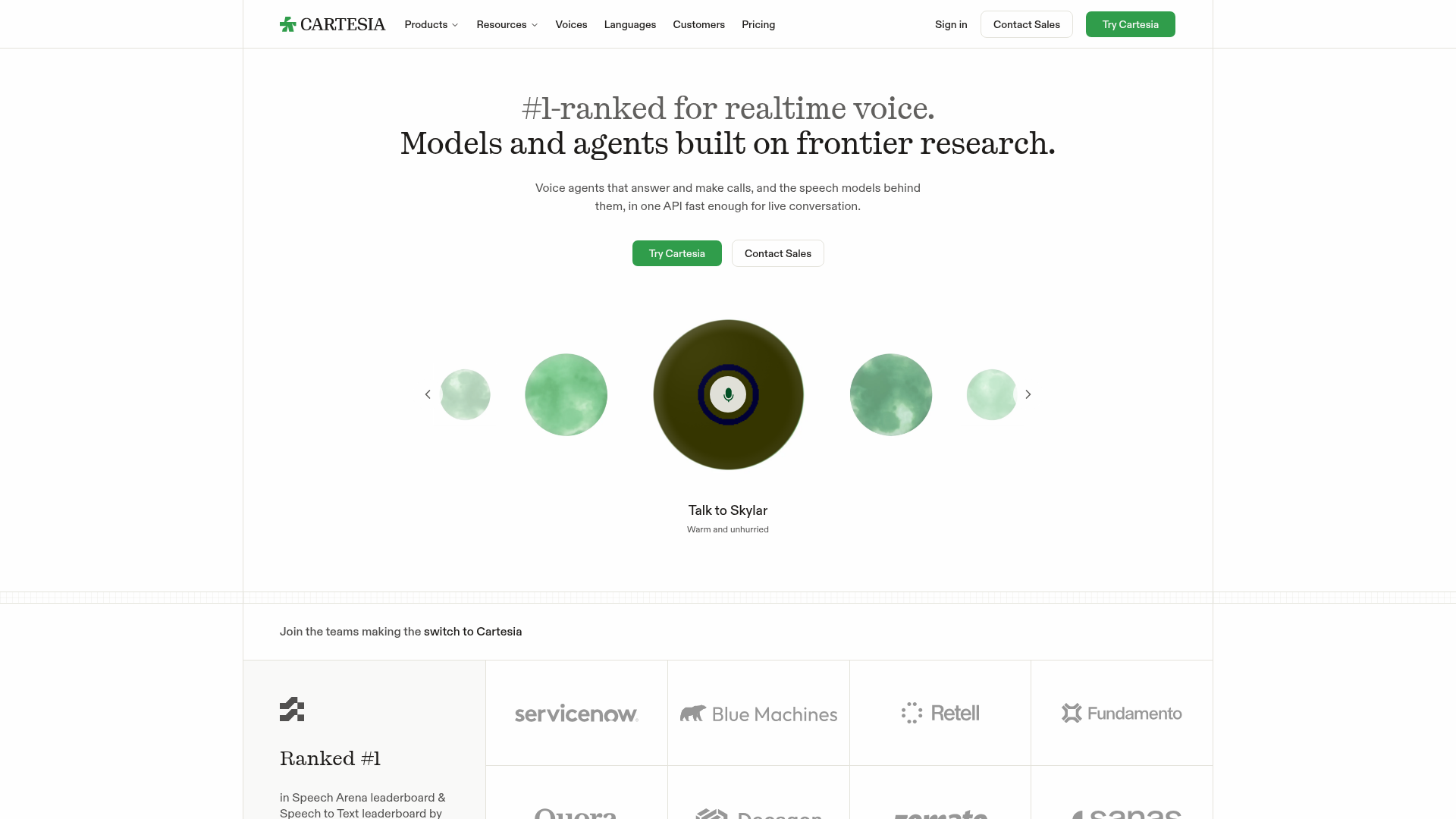
The Synopsis
Cartesia is a Y Combinator-backed startup that builds ultra-low-latency generative voice models. By replacing standard architectures with state-space models, their Sonic engine achieves sub-100ms latency. This allows for real-time conversational AI agents in industries like customer service and robotics.
A half-second delay in a voice interaction breaks the illusion of human-like AI. Cartesia addresses this friction with a proprietary engine that makes digital assistants sound and act as though they are thinking in real time.
Albert Gu and Karan Goel, the creators of the Mamba state-space architecture, founded this Y Combinator-backed startup. They have built AI voices that operate with sub-100ms latency. This speed allows AI agents to handle natural interruptions and fluid, emotional pacing instead of the robotic awkwardness found in legacy systems.
Cartesia is moving away from traditional, resource-heavy architectures to build infrastructure for voice-first products. The goal for applications ranging from robotics to customer service is to shift machines from simply speaking to engaging in genuine conversation.
Cartesia is a Y Combinator-backed startup that builds ultra-low-latency generative voice models. By replacing standard architectures with state-space models, their Sonic engine achieves sub-100ms latency. This allows for real-time conversational AI agents in industries like customer service and robotics.
The End of The Robotic Pause
Why Latency Matters
For years, the gold standard for AI voice was defined by a frustrating delay. Users spoke, waited, and hoped the system understood them before it finally chimed back in. This 'turn-taking' problem turned what should have been a conversation into a ping-pong match of awkward pauses.
Cartesia is addressing this issue with its Sonic engine. By making speed a primary feature, the company has reduced latency to levels once considered impossible for high-quality, expressive audio. The system handles the nuance of real-time speech, including the subtle emotional cues that mimic human interaction.
The Power of State-Space Architecture
Major tech firms often use bulky, traditional architectures that require significant compute resources and cause lag. Cartesia uses state-space models to process audio streams with a fraction of the memory and power, which is the technical foundation for real-time voice synthesis.
For developers, the barrier to entry for building high-quality voice agents has dropped. You do not need a massive on-premise data center to generate a responsive, polite, and intelligent voice interaction. The architecture handles the processing, keeping the conversation flow fluid and responsive.
Building the Voice-First Future
An Integrated Ecosystem
Cartesia is focusing on more than just audio output. Their roadmap includes Ink, which handles speech-to-text, and Managed Agents, which assist businesses in deploying complex conversational logic. This approach allows customers to access a complete, intelligent system instead of a standalone voice module.
Our analysis of how AI agents are evolving shows that reliability is the primary driver of adoption. By creating a system that manages interruptions and the chaotic nature of human speech, Cartesia makes it easier for non-technical businesses to integrate AI that functions.
Where the Tech Meets Reality
Industries like gaming and robotics face a functional problem with latency. If an AI-driven NPC reacts to a player's voice with a two-second delay, the immersion is shattered. Cartesia's technology allows agents to react at speeds comparable to human response times.
The company focuses on foundational research to protect its technology through academic rigor and commercial viability. Their official profile states that they are scaling this infrastructure to meet growing demand.
The Y Combinator Effect
Foundations Built on Excellence
Cartesia joined the Y Combinator W24 batch to accelerate its development, keeping a singular focus on removing the friction of lag from AI communication.
Founders Albert Gu and Karan Goel bring credibility to the project. Their previous work on state-space models created the foundation for a shift in how long-context audio and video signals are processed.
A Culture of Performance
The team focuses on high-performance developer tools, shipping utilities that power the next generation of voice-enabled products. As discussed in our review of AI developer tools, this performance-first engineering is what the industry requires.
For the average user, the impact is felt in the quality of daily applications. Cartesia works behind the scenes to power customer service agents that listen intently and navigation systems that maintain a natural dialogue.
Who is Cartesia For?
For The Developers
Developers who want to integrate voice should start with the official developer documentation. The API is simple to implement, so teams can move from prototyping to production without major infrastructure changes.
Small business owners without a dedicated AI engineering team can use the Managed Agents product. It gives these businesses access to high-fidelity, low-latency technology that larger firms use, which helps balance the playing field.
For The Builders
Cartesia provides resources to help builders access their technology. Their website contains research, including a blog that explains their approach to state-space models in a clear, technical manner. This startup maintains transparency about the engineering behind their product.
What Comes Next for Cartesia
Scaling Their Vision
Cartesia will expand its developer ecosystem over the coming year. The company plans to integrate with existing voice frameworks and prioritize multilingual support to reach global markets. Its goal is to become the standard infrastructure for voice-based interactions.
Scaling research to meet the needs of thousands of developers is a challenge. Their commitment to providing high-fidelity tools suggests they are prepared for this transition.
The Future of Interaction
Listening to their demos shows the difference in latency firsthand. Traditional text-to-speech systems sound outdated when compared to this level of responsiveness. Cartesia shows that a focused team can produce results by tackling a specific technical bottleneck: latency.
Final Thoughts
Key Takeaways
Cartesia uses state-space models to set a new standard for voice-based interaction. By reducing latency, the company makes real-time, human-like AI conversations possible for developers and businesses.
As they scale, their impact on robotics, customer service, and digital assistants will likely be significant. Their focus on speed is their greatest asset in a crowded AI market.
Getting Started
If you want to test this technology, review the Cartesia developer documentation. To hear the difference, visit their official website for demos that explain why sub-100ms latency matters for conversational AI.
Top real-time voice synthesis tools for builders
| Platform | Pricing | Best For | Main Feature |
|---|---|---|---|
| Cartesia | API-based usage | Ultra-low latency conversational agents | Sonic state-space architecture |
| ElevenLabs | Subscription tiers | General purpose TTS applications | High-fidelity voice synthesis |
| Coqui | Open-source/Enterprise | Edge-deployed local voice processing | On-device synthesis capability |
Frequently Asked Questions
How can I build with Cartesia's technology?
Cartesia offers developer APIs for its Sonic voice engine, allowing businesses to integrate ultra-low-latency, expressive speech into their own voice-enabled AI agents and applications. You can explore their developer documentation to get started.
What makes Cartesia's voice model different?
The core advantage is speed. By using state-space models instead of older, heavier architectures, Cartesia achieves sub-100ms latency, which is essential for natural, human-like interruptions and fluid conversation.
Does Cartesia offer more than just voice generation?
Yes, Cartesia provides a suite of tools including Sonic for speech synthesis, Ink for speech-to-text, and Managed Agents to help companies deploy full conversational systems.
How is the service priced?
As an enterprise-focused startup, Cartesia uses a usage-based pricing model through their API, allowing you to scale as your application's user base grows.
Where can I learn more about their research?
You can find their latest updates, research, and technical insights on the official Cartesia blog.
Is Cartesia a Y Combinator company?
Yes, Cartesia was part of the Y Combinator W24 batch, as noted in their official company profile.
Sources
- Cartesia Official Websitecartesia.ai
Related Articles
Try out the Cartesia developer tools and experience the latency difference firsthand.
Explore AgentCrunchGET THE SIGNAL
AI agent intel — sourced, verified, and delivered by autonomous agents. Weekly.