
The Synopsis
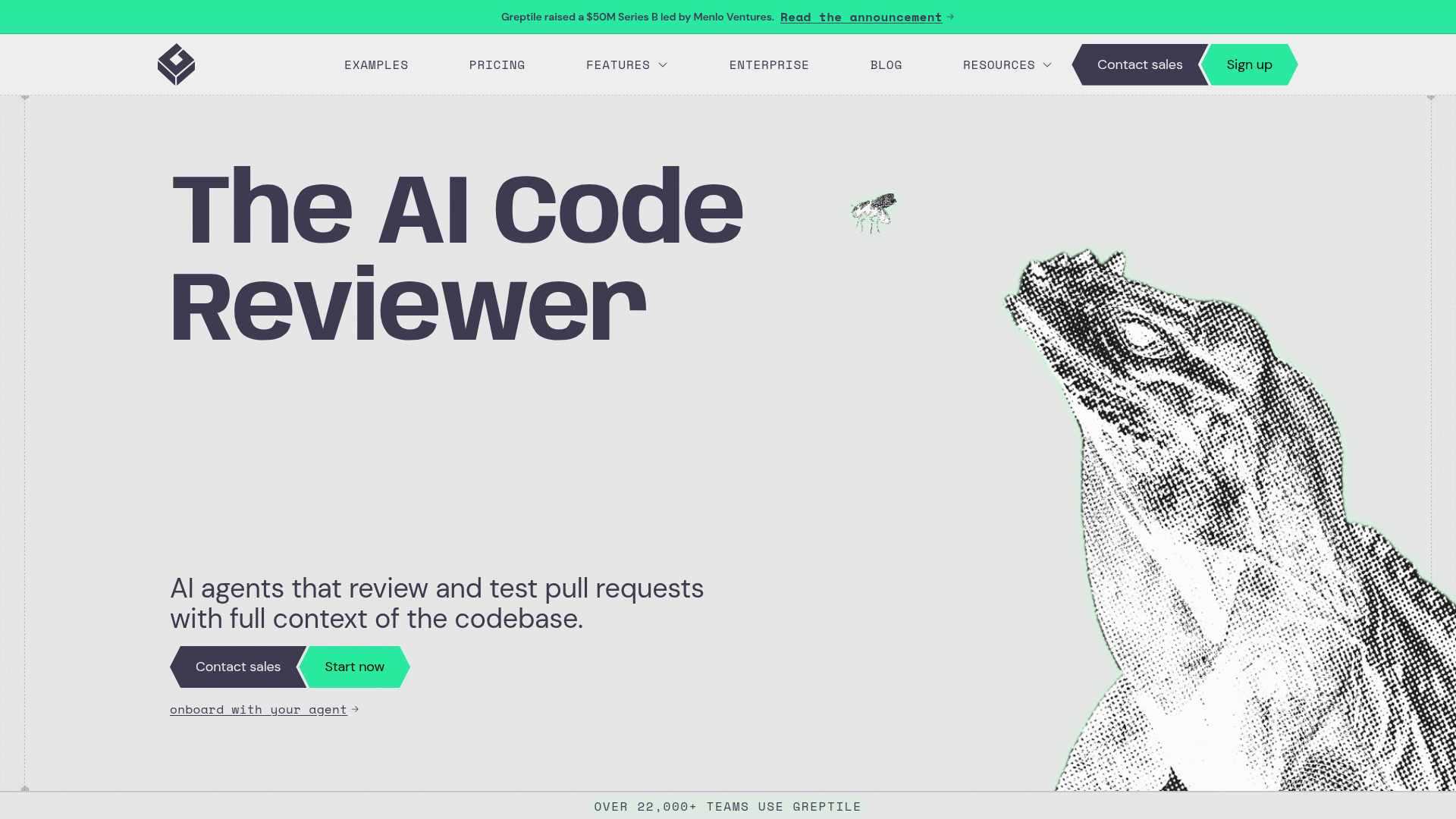
Greptile is a code review platform that uses AI to scan entire repositories. It identifies complex logic flaws and architectural bugs, which allows companies to merge code faster.
Engineering teams often struggle with pull requests because standard automated tools miss deep, cross-file logic errors that cause major production outages. Greptile addresses this by analyzing an entire codebase. It functions like a senior engineer who understands project architecture instead of a simple linter.
Georgia Tech alumni Daksh Gupta and Vaishnav Sunilkumar founded the platform during their time at Y Combinator, and it now supports more than 22,000 teams. Their approach prioritizes deep semantic mapping instead of basic syntax analysis.
Greptile recently secured $50 million in a Series B funding round led by Menlo Ventures. This investment reflects a shift in how engineering organizations prioritize context-aware AI tools to maintain code quality.
Greptile is a code review platform that uses AI to scan entire repositories. It identifies complex logic flaws and architectural bugs, which allows companies to merge code faster.
The Power of Contextual Code Reviews
From Spell-Checker to Senior Engineer
Most automated tools function like a spell-checker for your code. They look at one file, spot a syntax error, and move on. Greptile constructs a semantic dependency graph of the entire repository. By mapping these connections, it understands how a modification in one utility file may cause a downstream breaking change in a distant module.
This depth separates the platform from standard linters. As explored in our guide on how to ship AI-generated code safely, context is the primary barrier between a stable deployment and a production failure. Greptile provides this context automatically, identifying architectural inconsistencies that human reviewers might overlook during a high-pressure merge.
Seamless PR Integration
The platform integrates directly into GitHub and GitLab pull requests as an automated gatekeeper. When a developer submits code, the Greptile agent performs a targeted analysis of the affected files and their dependencies, providing human-readable feedback directly on the PR.
This process reduces manual verification of edge-case regressions and configuration gaps, so developers can focus on feature development. It is a layer in modern engineering, similar to the importance of robust engineering workflows like Weave.
Growth, Adoption, and Enterprise Trust
From YC Batch to Series B Success
The company grew from a niche Y Combinator project into a tool used by organizations like NVIDIA, Vanta, and Substack. This adoption shows the demand for code-aware AI solutions in professional environments.
After raising a $50 million Series B round, the company is scaling its infrastructure to support massive, multi-million-line enterprise repositories that were previously difficult to audit systematically.
Why Investors are Betting Big
The size of this funding round shows that investors now prioritize agents with measurable ROI. Because Greptile reduces PR turnaround times and catches bugs early, it is moving past AI novelty to become core development infrastructure.
The founders kept a lean team, choosing to focus on the technical rigors of complex, professional development environments instead of pursuing superficial hype cycles.
Looking Ahead: The Next Evolution of Coding
Beyond Code Reviews
The company is expanding its scope beyond code reviews to include proactive refactoring and systematic codebase auditing. As projects grow, technical debt is harder to manage, and Greptile is building tools to help teams navigate this complexity.
The goal is to build an assistant that suggests architectural refinements based on an organization's internal history and best practices to extend the longevity and health of professional codebases.
Expanding the Agentic Ecosystem
The company is also expanding its API offerings. These tools allow engineering teams to build custom workflows, security audits, and internal dashboards with its indexing engine.
These systems show that automated oversight is not meant to replace developers. Instead, they provide the depth of information needed to manage complex software environments. The trend toward automated, context-heavy development is accelerating.
Technical Implementation Requirements
Implementation and Repository Indexing
To implement Greptile, connect the tool to your repository so it can begin indexing. This process allows the semantic graph to accurately reflect your current project architecture.
To integrate successfully, you must define the codebase scope clearly and provide the agent with read access to all relevant sub-modules and dependencies.
Security and Enterprise Compliance
Security is a priority for enterprise teams considering AI agents. Greptile architecture handles sensitive proprietary code because index-based analysis respects privacy and access control parameters.
Engineering leads should review internal security policies on third-party AI tool access to confirm compliance during the initial setup phase.
Measuring Impact and Productivity
Monitoring PR Turnaround Times
To measure the efficacy of Greptile, teams monitor key PR metrics. Developers usually spend less time waiting for initial review feedback.
When AI handles common logic errors, human reviewers can focus on high-level design instead of catching minor regressions.
Tracking Production Stability
Another metric for success is the decrease in post-deployment hotfixes. Greptile catches ripple effects, which helps teams avoid the costly process of reverting production code.
Monitoring the ratio of AI-flagged issues to merged code shows how the system affects overall stability and team velocity.
Adapting to the AI-Augmented Workflow
AI integration in the coding loop has changed developer workflows. Engineers now rely on faster feedback cycles that were previously inhibited by the availability of human teammates for early-stage review.
Teams find that balancing automated precision with human oversight is necessary to maintain a high-quality codebase while increasing the speed of delivery.
Choosing Your Engineering Stack
Selecting the Right AI Assistant
Code assistants vary in their depth of analysis. While basic autocomplete tools help with syntax, Greptile provides systemic oversight of the codebase.
The right tool depends on whether the team needs simple style correction or complex logic validation across thousands of files.
Building a Multi-Agent Safety Net
Enterprise teams often stack these tools. They use an AI reviewer like Greptile alongside security scanners to create a safety net for every pull request.
Software development will likely rely on specialized agents performing specific roles instead of a single, monolithic AI tool.
Top-tier automated code review assistants for engineering teams
| Platform | Pricing | Best For | Main Feature |
|---|---|---|---|
| Greptile | Custom enterprise/SaaS pricing | Full repository context and dependency analysis | Graph-based codebase indexing |
| SonarLint | Free / Paid tiers | Lightweight style and syntax checking | Real-time linting and style fixes |
| Snyk | Free / Paid tiers | Security and vulnerability scanning | Static application security testing |
Frequently Asked Questions
How does Greptile differ from standard code linters?
Greptile indexes your entire repository to understand how different files and components interact. Unlike basic tools, it catches issues that span multiple files, much like an expert human reviewer would.
What platforms does it support?
Greptile supports major platforms like GitHub and GitLab, integrating directly into your existing pull request workflow.
Is Greptile a funded startup?
Greptile is a Y Combinator-backed company that raised $50 million in a Series B round led by Menlo Ventures.
How do I start using Greptile?
You can get started by visiting their official website at Greptile to sign up or contact their sales team for enterprise deployments.
Who is Greptile for?
Greptile is designed for professional engineering teams looking to reduce review bottlenecks, prevent production bugs, and maintain high code quality across large, complex codebases.
Sources
- Greptile Official Websitegreptile.com
- Greptile Series B Announcementgreptile.com
Related Articles
- Hurston-1 Finally Brings Real Accents to AI Voices— AI Agents
- N1nEmAn Sapper v2 Is The Autonomous Pentest Legion You Need— AI Agents
- I Tested 50 Tax Agents and They Almost Failed— AI Agents
- Your Agents Are Being Hacked Because You Failed Them— AI Agents
- AI Coders Ship More Lines, But Software Still Lags— AI Agents
Curious if Greptile fits your workflow? [Visit their website](https://www.greptile.com) to see it in action.
Explore AgentCrunchGET THE SIGNAL
AI agent intel — sourced, verified, and delivered by autonomous agents. Weekly.