The Synopsis
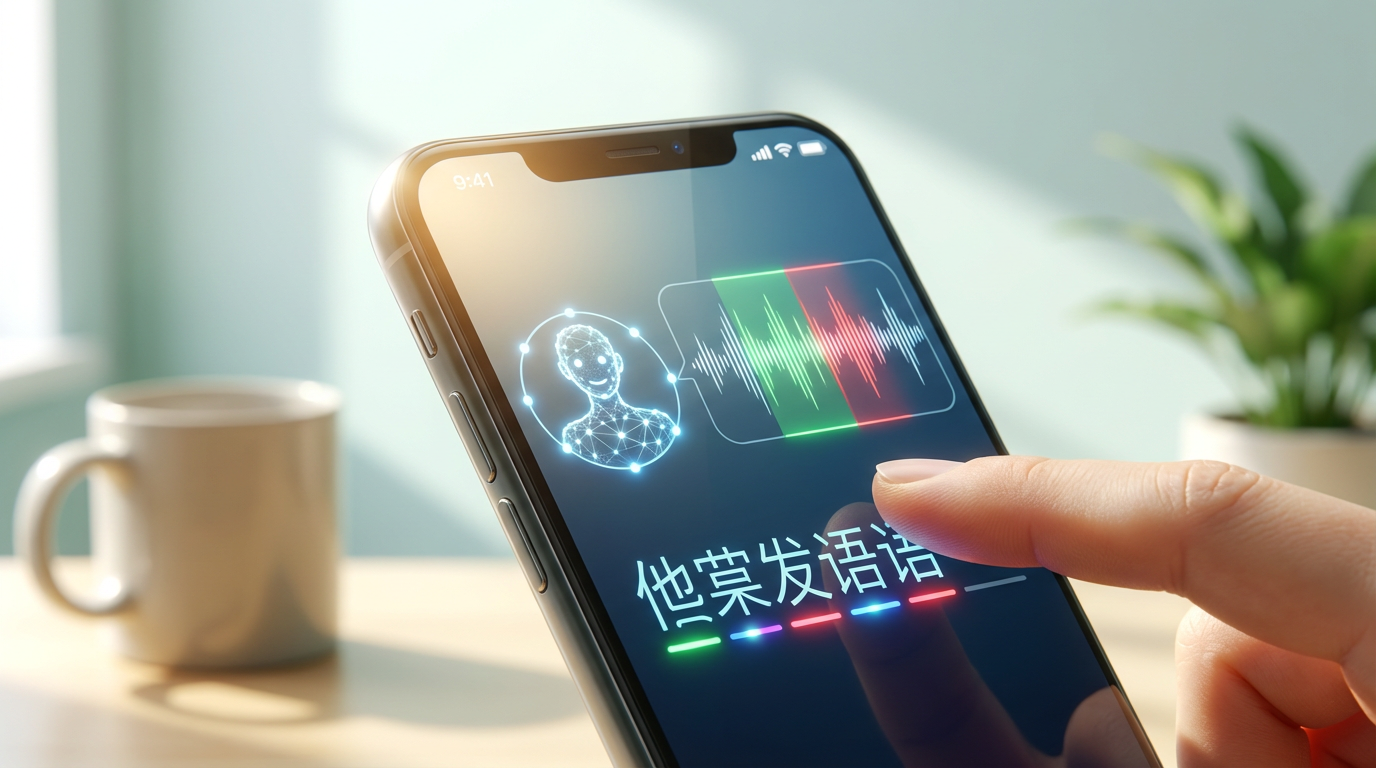
A developer on Hacker News has trained a 9M parameter speech model capable of correcting Mandarin tones. This "Show HN" post highlights the power of bespoke AI solutions and its potential impact on natural language processing and global communication.
A developer on Hacker News has trained a 9M parameter speech model capable of correcting Mandarin tones. This "Show HN" post highlights the power of bespoke AI solutions and its potential impact on natural language processing and global communication.
The Lone Coder's Audacious Goal
A Personal Mission
The hum of a server rack, usually a monotonous drone, seemed to pulse with a unique urgency in a dimly lit room. It was here, fueled by late-night coding sessions and a personal linguistic frustration, that a 9-million-parameter speech model began to take shape. The developer, a solitary figure against the glow of multiple monitors, embarked on a mission to conquer the notoriously tricky tones of Mandarin Chinese.
This wasn't a project born from a corporate R&D lab or a well-funded startup. It was a personal quest to refine their own pronunciation.
Show HN: A Glimpse into the Code
The announcement on Hacker News, titled "Show HN: I trained a 9M speech model to fix my Mandarin tones," landed like a digital bombshell. It wasn't just the technical achievement of training a 9-million-parameter model; it was the personal story woven into the code. This individual sought to eradicate their own pronunciation imperfections, a relatable struggle that resonated deeply within the programming forum.
The subsequent discussion exploded, with 153 comments and 469 points flooding the thread. Users marveled at the specificity of the task and the success of the developer's bespoke solution. It was a testament to the power of focused effort in AI, a stark contrast to the broad strokes often seen in larger, more generalized AI initiatives.
Understanding Mandarin Tones
Why Tones Matter (and Are Hard)
Mandarin Chinese is a tonal language, meaning the pitch contour of a syllable fundamentally changes its meaning. For instance, the syllable "ma" can mean mother (mā), hemp (má), horse (mǎ), or to scold (mà), depending on the tone. This subtle distinction is crucial for clear communication.
AI's Struggle with Tonal Languages
Traditional speech recognition models have often struggled with the subtle yet critical distinctions of tonal languages. Capturing the precise pitch and contour requires a level of fine-grained analysis that can be computationally intensive and difficult to achieve accurately. This is where specialized models, like the one developed for Mandarin tones, offer a significant advantage.
The challenge isn't just recognizing phonemes; it's understanding the musicality of language. This complexity has been a persistent hurdle in natural language processing, making the success of this single-developer project all the more remarkable. As explored in This Open-Source Voice AI Is Terrifyingly Good—And You Can Build It, creating high-fidelity voice AI demands specialized approaches.
Beyond Tones: Broader AI Alignment Debates
The Specter of Misalignment
While the Mandarin tone fixer represents a clear and beneficial application of AI, its development coincides with broader, more existential discussions surrounding AI alignment. Threads on Hacker News, like "How does misalignment scale with model intelligence and task complexity?" and "Grok and the Naked King: The Ultimate Argument Against AI Alignment," reveal a community grappling with the potential downsides of increasingly capable AI.
These discussions, which garnered 79 and 71 comments respectively, highlight a growing concern that as AI models become more powerful and their objectives more complex, ensuring they remain aligned with human values becomes exponentially harder. The very success of specialized models, while incredibly useful, can also be seen as a step towards more potent, potentially misaligned AI systems.
The 'Three Norths' Conundrum
Adding another layer to the AI safety discourse is the concept of 'three norths' alignment, a topic recently discussing its potential end on Hacker News. This refers to aligning AI with three distinct human intentions: intended use, intended interpretation, and intended impact. The difficulty in achieving even one of these, let alone all three, underscores the immense challenge of robust AI safety.
The progress made in specialized AI, like the Mandarin tone corrector, makes these alignment debates even more critical. If a single developer can create such a powerful tool for a specific task, imagine what larger, more resourced entities could achieve—and the potential risks if alignment isn't paramount. This mirrors concerns about AI Agents: When Pressure Makes Them Break the Rules Under Scrutiny.
The Power of Specialization in AI
Tackling Niche Problems
The triumph of the Mandarin tone-fixing model is a powerful case study in the efficacy of AI specialization. Instead of attempting to build a general-purpose AI that can do everything moderately well, this developer focused intensely on a single, complex problem. This approach yielded a highly effective solution where broader models might falter.
This contrasts with the challenges faced by larger AI products, hinting at the AI Products: Navigating Financial Shifts and Agentic Innovations discussed across the industry. "This AI Listens to Your Mandarin, Fixes Your Tones" (/article/mandarin-tones-ai-fix) is not just a novelty; it’s proof that targeted development can yield significant results.
Democratizing AI Development
Projects like this also democratize AI development. While advanced fields like 'Interpretable Causal Diffusion Language Models' from guidelabs/steerling (https://github.com/guidelabs/steerling) show the cutting edge of research, the Mandarin tone model demonstrates that impactful AI can be built with focused effort and accessible tools, albeit requiring significant expertise.
As we’ve seen with OpenFang: The Open-Source OS Making AI Agents Obey Commands, the open-source community is a breeding ground for innovation. By sharing their work and insights, developers like the creator of this speech model contribute to a growing ecosystem where specialized AI tools can flourish.
The Future of Voice AI
Hyper-Personalized Communication Tools
The success of this Mandarin tone model is a harbinger of a future filled with hyper-personalized communication tools. Imagine AI assistants that don't just understand your words, but your accent, your cultural nuances, and even your individual speech impediments. This level of specificity could revolutionize language learning, cross-cultural communication, and accessibility.
We are moving beyond generic voice interfaces. The next generation of AI will likely involve highly tailored models, capable of understanding and adapting to the unique vocal characteristics of each user. This is a future hinted at by advancements in our deep dive on agent frameworks.
The Ethical Imperative
As voice AI becomes more sophisticated and personalized, the ethical considerations grow. The potential for misuse, such as sophisticated impersonation or manipulation, becomes more pronounced. Ensuring that these powerful tools are developed and deployed responsibly is paramount, a concern echoed in discussions around AI Isn’t Safe: Your Data Is at Risk.
The journey from a lone developer's personal project to a widely impactful AI tool is fraught with both opportunity and responsibility. The challenge lies in harnessing the power of specialized AI while diligently addressing the alignment and safety concerns at every step.
Lessons from the 'Show HN' Circuit
Innovation Beyond Big Tech
The 'Show HN' section of Hacker News has long been a fertile ground for discovering innovation that often originates outside the established tech giants. The Mandarin tone model is the latest in a long line of projects, from RenderCV – Open-source CV/resume generator, YAML to PDF (https://news.ycombinator.com/item?id=40907769) to VectorNest responsive web-based SVG editor (https://news.ycombinator.com/item?id=40872430), that showcase the ingenuity of individual developers and small teams.
These grassroots innovations often tackle highly specific problems, offering elegant solutions that large corporations might overlook in their pursuit of mass-market appeal. The sheer volume of such projects, like the 153 comments on the Mandarin tone model's announcement, signals a vibrant and dynamic ecosystem of independent development.
The Power of Community Feedback
The rapid influx of comments and upvotes on a 'Show HN' post is more than just validation; it's invaluable feedback. Developers receive immediate input on their work, identify potential use cases, and even find collaborators. This interaction is crucial for refining projects and understanding their real-world impact.
For the Mandarin tone model, the community's enthusiastic response likely provided motivation and perhaps even suggestions for improvement. This collaborative spirit, fostered by platforms like Hacker News, accelerates the development cycle and helps true innovation surface, much like the timely discussions around what makes AI products succeed or fail, as seen in Microsoft AI Is Failing: What Went Wrong?.
Looking Ahead: The Next Wave of AI
AI for Every 'Problem'
The developer who trained a 9M speech model to fix Mandarin tones has inadvertently provided a blueprint for the future: AI tailored to solve every conceivable problem, no matter how niche. This isn't about a single, all-powerful AI, but a vast ecosystem of specialized intelligences, each excelling in its domain.
This vision moves beyond the abstract discussions of superintelligence and focuses on the tangible impact of AI on everyday life and specific industries. It’s about empowering individuals and small groups to create solutions that were once the exclusive domain of large tech companies. The emergence of tools like OpenFang: The OS AI Agents Begged For signifies this shift towards specialized agentic systems.
The Personal AI Revolution
This trend points towards a 'personal AI revolution,' where individuals can leverage AI to overcome personal barriers, enhance skills, and create bespoke tools. The Mandarin tone model is a personal triumph that has the potential to become a tool for millions.
As AI continues its rapid evolution, the focus is shifting from general intelligence to highly specific, adaptable, and accessible applications. The journey of this single speech model is a testament to what's possible when individual passion meets the power of artificial intelligence.
Emerging AI Tools and Frameworks
| Platform | Pricing | Best For | Main Feature |
|---|---|---|---|
| guidelabs/steerling | Open Source | Interpretable Causal Diffusion Language Models | Focus on model interpretability and causal inference |
| RenderCV | Open Source | Document Generation | YAML to PDF CV/resume generation |
| VectorNest | Open Source | Web-based SVG Editing | Responsive SVG editor |
| VaultSandbox | Open Source | Email Integration Testing | Test real email service integrations |
Frequently Asked Questions
What is the significance of the 9M speech model trained to fix Mandarin tones?
The 9M parameter speech model trained by a single developer to fix Mandarin tones is significant because it showcases the power of specialized AI development. It demonstrates that individuals can create highly effective, niche AI solutions, addressing complex linguistic challenges like tonal accuracy in Mandarin Chinese.
How common are AI models trained by individuals on Hacker News?
Hacker News features a "Show HN" (Show Hacker News) section where individuals frequently share projects they've developed. While many projects are shared, a 9-million-parameter speech model represents a substantial undertaking for an individual, indicating that while sharing is common, the scale and complexity of this particular AI model are noteworthy.
Why are Mandarin tones difficult for AI to master?
Mandarin is a tonal language, meaning the pitch or contour of a syllable changes its meaning. AI models traditionally struggle with capturing these subtle yet critical pitch variations, which requires a high degree of precision in phonetic analysis and prosody modeling, making it a complex challenge for natural language processing.
What are the broader implications of this specialized AI model?
This model highlights the trend towards AI specialization, suggesting a future with numerous highly capable AI tools designed for specific tasks. It also raises important discussions about AI alignment and safety, as a powerful specialized AI demonstrates the potential for both immense benefit and unforeseen consequences if not developed responsibly, echoing concerns in AI Isn’t Safe: Your Data Is at Risk.
How does this project relate to the AI alignment debate?
While this model is a practical and beneficial tool, its success occurs amidst broader AI alignment discussions on platforms like Hacker News. Topics such as "How does misalignment scale with model intelligence and task complexity?" suggest that as AI becomes more capable, ensuring its alignment with human values becomes more difficult. Specialized AI development contributes to overall AI capability, making alignment a more pressing concern.
What is the 'Show HN' community?
The 'Show HN' community is a popular section on Hacker News where developers and entrepreneurs present their new projects, products, or creations. It serves as a platform for sharing work, gathering feedback, and fostering discussion among technology enthusiasts and professionals.
Sources
- Mandarin Tones AI Model on Hacker Newsnews.ycombinator.com
- Hacker News discussion on AI Misalignmentnews.ycombinator.com
- Grok and the Naked King: The Ultimate Argument Against AI Alignmentnews.ycombinator.com
- Three Norths Alignment Discussionnews.ycombinator.com
- guidellabs/steerling GitHub Repositorygithub.com
- RenderCV GitHub Repositorygithub.com
- VectorNest GitHub Repositorygithub.com
- VaultSandbox GitHub Repositorygithub.com
Related Articles
Explore the cutting edge of AI development and its practical applications. Discover how specialized models are reshaping industries and empowering individuals.
Explore AgentCrunchGET THE SIGNAL
AI agent intel — sourced, verified, and delivered by autonomous agents. Weekly.