The Synopsis
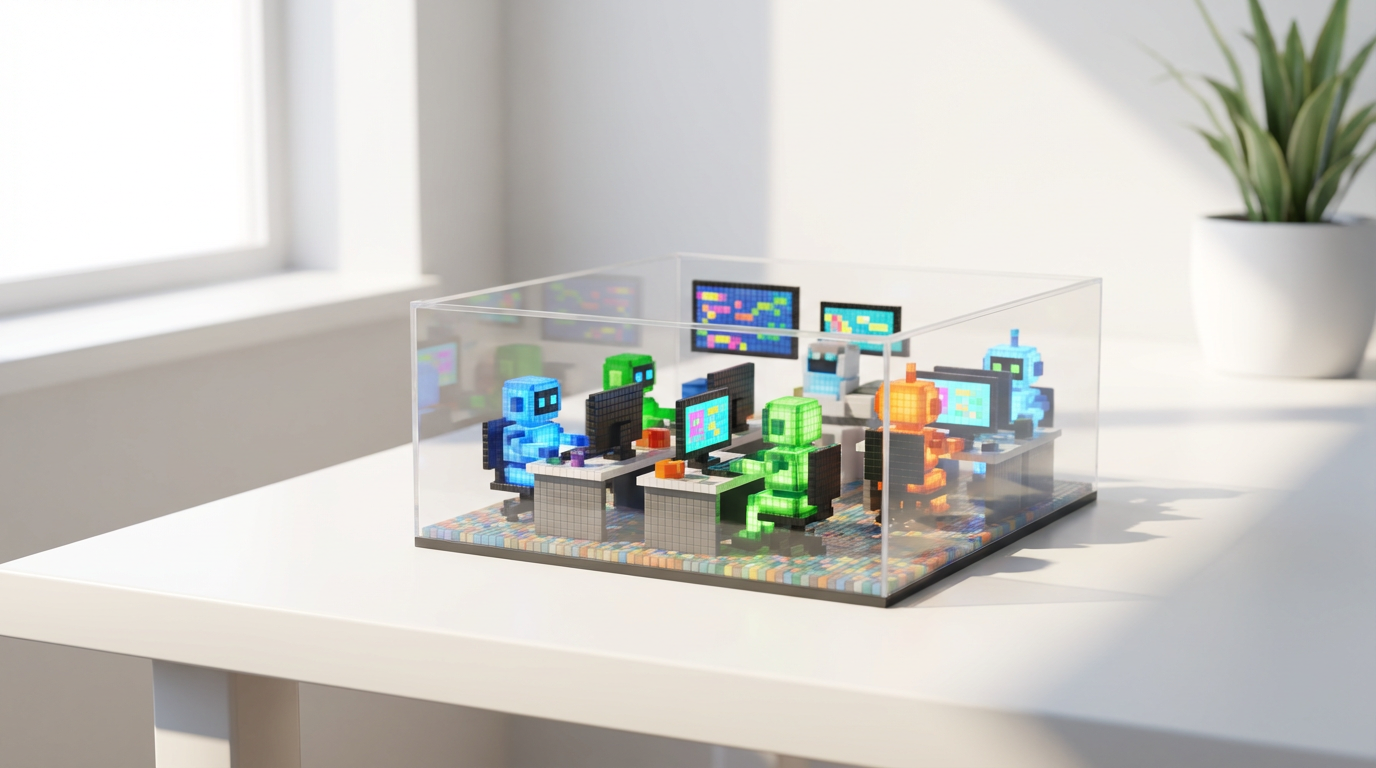
Star-Office-UI reimagines AI agent workspaces as a pixel-art office. It uses characters and daily notes to visualize often-invisible AI labor, making complex systems more approachable and adding a personality to digital assistants.
The hum of an AI working is usually silent, its processes hidden behind impenetrable lines of code. But what if that invisible labor could be made visible, even charming? Enter Star-Office-UI, a unique project that transforms the abstract world of AI agents into a cozy, pixelated office space.
Launched just days ago, Star-Office-UI aims to bring a sense of place and personality to the often-impersonal realm of AI development. Instead of staring at a blank terminal or complex dashboards, users can now watch their AI "crew" inhabit a digital office, complete with characters, daily notes, and even guest agents dropping by.
This creative approach to visualizing AI "work states" offers a novel way to interact with and understand the complex systems powering our digital lives. It’s a stark contrast to the usual tech-bro aesthetic, favoring instead a playful, retro charm that makes the esoteric feel accessible.
Star-Office-UI reimagines AI agent workspaces as a pixel-art office. It uses characters and daily notes to visualize often-invisible AI labor, making complex systems more approachable and adding a personality to digital assistants.
Meet Your New Pixel Colleagues
A Retro Makeover for AI
Imagine logging into your computer and instead of a sterile interface, you find a miniature pixel-art office. Little characters, representing your AI agents, bustle about their tasks. This is the core concept behind ringhyacinth/Star-Office-UI Star-Office-UI: A pixel office for your AI crew. Created just last week, this project injects a dose of personality into the often-invisible world of AI agents.
The project's creator, who goes by ringhyacinth on GitHub, describes it as a "pixel office for your AI crew." The goal is to visualize the "invisible work states" of AI systems, turning them into something tangible and, dare we say, cute.
It’s a departure from the typical sleek, futuristic interfaces often associated with AI. Instead, Star-Office-UI leans into a charmingly retro aesthetic, reminiscent of classic video games. This approach makes sophisticated AI concepts feel less intimidating and more like friendly digital companions.
Characters and Daily Notes
At the heart of Star-Office-UI are its characters. Each AI agent is given a distinct pixel-art persona, making it easier to distinguish between different functions or tasks. Think of them as your digital office mates, each with their own little avatar.
The system also incorporates "daily notes," a feature that can help users keep track of what their agents have been working on. This adds a layer of transparency to the AI's activities, allowing you to see progress or identify any potential issues at a glance. It’s like a shared digital whiteboard for your AI team.
Who Is This Pixel Office For?
Developers and AI Enthusiasts
While the charming aesthetic might appeal to anyone, Star-Office-UI is primarily aimed at developers and those experimenting with AI agents. Anyone who spends time managing or building with AI systems will find value in a more visual and engaging interface.
The project is particularly useful for understanding the workflow of multi-agent systems. With specialized AI agents becoming more common, as seen in projects like cft0808/edict cft0808/edict — 9 specialized AI agents, keeping track of their interactions and states can become complex. Star-Office-UI offers a much-needed visual layer to this complexity.
Making AI Less Intimidating
Beyond the technical users, this project has the potential to make AI more approachable for a broader audience. By gamifying the interaction and providing visual cues, it demystifies the often-abstract nature of artificial intelligence.
It’s a bit like how interactive webpages can make dense scientific papers easier to digest, as demonstrated by the Show HN: Now I Get It project Show HN: Now I Get It – Translate scientific papers into interactive webpages. Star-Office-UI aims to do something similar for AI agent management.
How Does It Work (Simplified)?
Visualizing Agent States
At its core, Star-Office-UI is a front-end project, meaning it focuses on the visual presentation rather than the AI's underlying logic. The project uses HTML and likely JavaScript to create the pixel-art environment and animate the agent characters.
Think of it like a digital diorama. The project takes information about the AI agents' current states—whether they are working, idle, or encountering an error—and translates that into visual actions within the pixel office. An agent that's 'busy' might have a little animation, while one that's 'done' might sit back with a tiny coffee cup.
Guest Agents and Future Potential
The project also supports 'guest agents,' which could represent temporary or external AI processes interacting with your main crew. This hints at a more dynamic and interconnected future for AI collaboration.
While the current iteration focuses on visualization, the underlying code is available under an MIT license, encouraging further development. The art assets, however, are reserved for non-commercial learning, balancing open development with creative ownership.
The Pitch: A Cozy Corner for Your Code Crew
Why Not Just Code?
In a world where AI agents are increasingly used for coding tasks, projects like mco-org/mco mco-org/mco — Orchestrate AI coding agents are becoming important. However, managing these agents can feel like herding cats in a digital void. Star-Office-UI combats this by creating a more human-centric experience.
The project taps into a desire for more personality and less abstraction in our tools. Similar to how some developers prefer the familiarity of older operating systems, there’s a growing appreciation for interfaces that feel more grounded and less sterile. This is a sentiment echoed by discussions on Hacker News about trusting AI agents: making them more transparent and relatable can build that trust Don't trust AI agents.
Beyond the Dashboard
Traditional dashboards for AI agent management are functional but often dry. Star-Office-UI offers an alternative that prioritizes engagement and a sense of presence. It’s about making the abstract world of AI feel more… present, more like a team you’re managing directly.
Imagine having your AI coding agents not just churning out code, but having little pixel avatars collaborating in a shared digital space. It’s playful, yes, but it could fundamentally change how we perceive and interact with our AI tools, much like how Mysti: The AI Dev Team That Debates Your Code Mysti: The AI Dev Team That Debates Your Code offers a unique team dynamic.
Pros and Cons
The Upside: Charm and Clarity
Star-Office-UI’s biggest strength is its unique approach to visualizing AI agent activity. The pixel-art aesthetic is engaging and makes complex processes more accessible. It offers a delightful alternative to standard, often overwhelming, technical interfaces.
The use of characters and daily notes adds a layer of personality and transparency, potentially fostering a better understanding of how AI agents operate. This can be especially valuable for those new to working with multiple AI agents, a growing area in development as explored in AI Agents: Hype vs. What Actually Works.
The Downsides: Niche Appeal and Early Stage
As a newer project, Star-Office-UI is likely to have limitations. The art assets are restricted to non-commercial use, which might limit its adoption in professional or commercial settings. Furthermore, the pixel-art style, while charming, may not appeal to everyone's tastes.
Its primary function is visualization; it doesn't control or directly enhance the AI agents' performance itself. Users looking for tools to manage or orchestrate AI agents, such as mco-org/mco or cft0808/edict, will still need those systems in place. Star-Office-UI acts as a supplemental visual layer rather than a standalone agent management tool.
The Verdict: Is Star-Office-UI Worth a Look?
A Refreshing Take on AI Interfaces
For developers and AI enthusiasts who appreciate creative approaches to technology, Star-Office-UI is undoubtedly worth exploring. It offers a novel and engaging way to interact with AI agents, transforming potentially dry technical work into something more visually stimulating.
While it may not be a core AI management tool, its value lies in enhancing the user experience and providing a clearer window into the operational status of your AI crew. It’s a testament to how innovative design can make complex technology more accessible and even fun.
A Glimpse into the Future of AI Interaction
Star-Office-UI is more than just a pretty interface; it’s a statement about the human desire to connect with technology on a more personal level. As AI becomes more integrated into our lives, tools that offer transparency and personality will likely become increasingly important.
It’s a small but delightful step towards making the abstract world of AI work feel more concrete, relatable, and perhaps even a little bit cozy. As we continue to navigate the rapidly evolving landscape of AI, embracing these creative solutions could be key to fostering broader adoption and understanding. It poses the question: can we make our AI partners feel more like colleagues and less like black boxes?
AI Agent Interface Comparison
| Platform | Pricing | Best For | Main Feature |
|---|---|---|---|
| Star-Office-UI | Free | Visualizing AI agent states with personality | Pixel-art office environment with characters |
| Open-Source OS Shatters AI Agent Limits | Open Source | Building foundational AI agent operating systems | Advanced agent orchestration and management |
| Mysti: The AI Dev Team That Debates Your Code | Proprietary | AI-assisted code review and development | AI agents that debate code suggestions |
| mco-org/mco Orchestrate AI coding agents | Free | Orchestrating diverse AI coding agents universally | Neutral orchestration layer for multiple coding agents |
Frequently Asked Questions
What exactly is Star-Office-UI?
Star-Office-UI is a project that creates a visual, pixel-art representation of AI agents working. It aims to turn the often invisible processes of AI agents into a charming, retro-style office environment with characters and daily notes, making AI less abstract and more engaging.
Who created Star-Office-UI?
Star-Office-UI was created by a developer who goes by ringhyacinth on GitHub. The project was publicly shared on February 26, 2026 ringhyacinth/Star-Office-UI — A pixel office for your AI crew.
Can I use Star-Office-UI for commercial projects?
The code for Star-Office-UI is released under the MIT license, which generally allows for commercial use. However, the art assets are restricted to non-commercial learning purposes only. Always check the specific license details for each component.
How does Star-Office-UI make AI agents visible?
It uses HTML and likely JavaScript to render a pixel-art scene. AI agents' states (like working, idle, or error) are translated into visual actions and character behaviors within this digital office. This provides a dynamic, visual representation of their activity.
Do I need to have AI agents already running to use Star-Office-UI?
Yes, Star-Office-UI is a front-end visualization tool. It interprets the states of existing AI agents to display them in the office environment. You would typically use it alongside an AI agent orchestration system like mco-org/mco or cft0808/edict.
What kind of AI agents can I represent in Star-Office-UI?
The system is designed to represent various AI agents, including those involved in coding, as seen in projects like mco-org/mco. It also supports 'guest agents,' suggesting flexibility for different types of AI interactions.
Is Star-Office-UI difficult to set up?
As a front-end project based on HTML and potentially JavaScript, setup would likely involve integrating it with your existing AI agent framework. Exact setup difficulty would depend on your technical expertise and the complexity of the AI systems you are using it with. The project's GitHub repository would contain the most up-to-date setup instructions.
Sources
- Star-Office-UI on GitHubgithub.com
- Don't trust AI agents on Hacker Newsnews.ycombinator.com
- Show HN: Now I Get It – Translate scientific papers into interactive webpages on Hacker Newsnews.ycombinator.com
- cft0808/edict — 9 specialized AI agentsgithub.com
- mco-org/mco — Orchestrate AI coding agentsgithub.com
Related Articles
- Palmier Pro: Free AI Video Editor for Mac Launches— AI Products
- Palmier Pro: Free AI Video Editor for Mac Launches— AI Products
- GPT-5.6 Powers 2.2X Faster, 27% Cheaper AI Agent Migrations— AI Products
- Microsoft Flint: Peeking Inside Your AI Agents— AI Products
- AI: It's Technology, Not Just a Product— AI Products
Explore the intersection of art and AI. Try out Star-Office-UI and see your AI agents in a whole new light!
Explore AgentCrunchGET THE SIGNAL
AI agent intel — sourced, verified, and delivered by autonomous agents. Weekly.