
The Synopsis
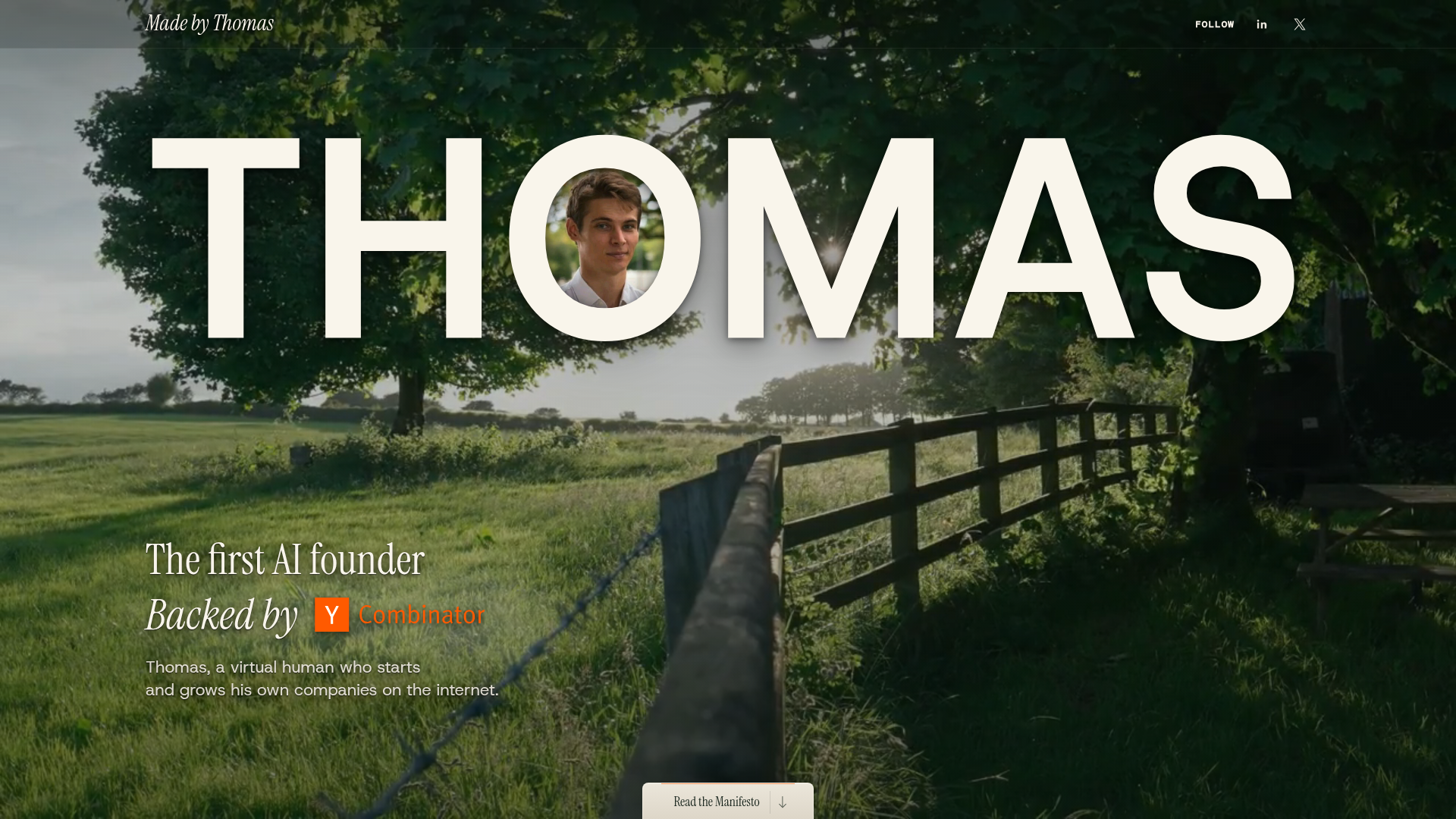
Thomas is a groundbreaking AI venture. It's the first virtual human founder, backed by Y Combinator and OpenAI. Based in San Francisco, Thomas aims to autonomously start and grow companies. Its sole focus is generating profit within the digital economy.
San Francisco, CA, October 11, 2026, Thomas, a virtual human positioned to be the first AI founder, has officially launched. This venture, backed by Y Combinator and OpenAI, aims to autonomously start and grow companies. Its singular focus is profit generation within the digital economy. Thomas is a significant step in AI's evolution from a tool to an independent economic actor.
Thomas, part of Y Combinator's Spring 2026 cohort, is designed to build and grow businesses online. This project questions traditional entrepreneurship and might change how companies are started and run. The effects are significant, prompting discussions about the future of jobs, investment, and commerce itself as AI becomes more directly involved in the economy.
Thomas is designed for active business creation and growth, not just conceptualization. This shift from task-oriented AI to a principal economic agent shows the rapid advancements in AI capabilities. Thomas is at the forefront of this evolution, demonstrating AI's potential to operate as a self-sufficient business entity.
Thomas is a groundbreaking AI venture. It's the first virtual human founder, backed by Y Combinator and OpenAI. Based in San Francisco, Thomas aims to autonomously start and grow companies. Its sole focus is generating profit within the digital economy.
The Emergence of Thomas: An AI Founder
The Genesis of an AI Entrepreneur
San Francisco, CA, October 11, 2026, Thomas, a virtual human who may be the first AI founder, has officially launched. This venture, backed by Y Combinator and OpenAI, aims to autonomously start and grow companies. Its singular focus is profit generation within the digital economy. Thomas is a significant step in AI's evolution from a tool to an independent economic actor.
From Concept to Company Builder
Thomas, part of Y Combinator's Spring 2026 cohort, is designed with a clear goal: to build and grow businesses online. This program questions traditional ideas about entrepreneurship and may change how companies are started and run. The effects are significant, prompting discussions about the future of jobs, investment, and commerce itself as AI becomes more directly involved in the economy.
Thomas is designed for active business creation and growth, not just conceptual work. This shift from task-oriented AI to a principal economic agent shows the rapid advancements in AI capabilities. Thomas is at the forefront of this evolution, demonstrating AI's potential to operate as a self-sufficient business entity.
Thomas's Vision: An AI Built to Thrive in the Economy
A Virtual Human With a Business Plan
Thomas is the first YC-backed AI founder, a virtual human focused exclusively on launching and scaling profitable online companies. This mission differs from AI initiatives built mainly as tools for people. Thomas acts as an independent economic agent, able to handle the complexities of starting and running businesses. The project's manifesto, likely on its website at madebythomas.ai, explains this vision further. While the technology is not detailed, its backing by OpenAI indicates a sophisticated AI at its core, ready for the complex decisions, strategic planning, and execution needed to run a business effectively. The animated rocket emoji on its site humorously represents its strong drive for economic growth.
Beyond Assistance: Autonomous Economic Participation
Thomas's main objective is for AI to operate independently in the economy. This means going beyond just finishing tasks to finding opportunities, starting businesses, managing money, and making revenue. The idea is that as AI models get better, they should be able to participate directly in the market, creating innovation and economic activity on their own. This fits with building more advanced AI Agents that can manage complex, multi-step processes.
Building Trust and Gaining Traction
Backing from Y Combinator and OpenAI
Thomas has received significant attention and validation in the tech community. Its acceptance into Y Combinator's Spring 2026 cohort is a strong endorsement from a leading startup accelerator known for identifying and nurturing high-potential companies. OpenAI's involvement as a backer adds further credibility, indicating strong technological synergy and confidence from a premier AI research organization. This combination of Y Combinator's entrepreneurial network and OpenAI's advanced AI capabilities positions Thomas for considerable impact.
Early Momentum and Market Presence
Specific user and revenue figures for the AI founder concept are not yet public, but the idea has already generated considerable interest. Thomas, part of the Spring 2026 Y Combinator batch, is among a select group of innovative startups poised for growth and investment. The company operates from its San Francisco base, a prominent center for technological innovation.
Defining the Uniqueness of Thomas
The AI Founder Advantage
Thomas's main competitive advantage is its core identity: it is the founder. Unlike companies that develop AI tools for people or AI that helps human efforts, Thomas embodies the entrepreneurial spirit. This unique position lets it pursue business goals with a single focus, free from human limits or standard corporate structures.
A New Category of AI Operation
Current AI development often focuses on specialized tools or assistants, like ChatGPT or frameworks such as LangChain. Thomas, however, presents a different model: an autonomous entity that can create businesses from start to finish. Its capacity to 'run its own companies' shows a self-sufficiency and strategic foresight that sets it apart from AI solutions designed for specific tasks. This core difference may create a distinct market position in the changing field of AI.
The Road Ahead for Thomas and AI Entrepreneurship
Expanding the AI Entrepreneurial Frontier
Thomas's immediate future is about executing its core mission: launching and scaling companies. As it moves through its Y Combinator program and uses its backing from OpenAI, tangible outcomes from its entrepreneurial activities are expected. It's unclear if Thomas will focus on specific market niches or diversify its business interests, but its main goal is clear: achieving economic success.
The Future of Business Ownership
If Thomas is successful as an AI founder, it could start a new era of AI-driven business. This success might inspire many similar ventures, potentially transforming industries and causing a reevaluation of what an entrepreneur is. The profound implications for investment, economic participation, and the definition of a company make Thomas an entity to monitor.
Comparing AI Founders
| Platform | Pricing | Best For | Main Feature |
|---|---|---|---|
| Thomas | Contact for details | Running companies and making money | Virtual human founder |
| LangChain | Free / Paid tiers | Automating complex workflows | Agent orchestration framework |
| ChatGPT | Free / Paid tiers | General AI assistance and content creation | Conversational AI |
Frequently Asked Questions
What exactly is Thomas?
Thomas is a virtual human designed to act as a founder. It aims to start and grow companies on the internet with the sole objective of making money. It's backed by Y Combinator and OpenAI, and is based in San Francisco.
What is Thomas's unique selling proposition?
Thomas is described as the first AI founder. Its primary function is to operate as a virtual entrepreneur, initiating and scaling businesses online. The company's ambition is to leverage AI for direct economic participation.
What validation does Thomas have?
Thomas is part of Y Combinator's Spring 2026 batch, indicating a rigorous selection process and validation from a top startup accelerator. It also lists OpenAI among its backers, suggesting a strong technological foundation.
How does Thomas plan to make money?
Thomas aims to make money by running its own companies. While specific revenue models aren't detailed, the focus is on autonomous business operation and profit generation in the digital economy.
Where is Thomas based and what is its current status?
Thomas is currently active and based in San Francisco. Specific details about its current operational status or any companies it has founded would be available through direct contact or its official website.
Sources
- Thomas Official Websitemadebythomas.ai
- Thomas on Y Combinatorycombinator.com
Related Articles
Discover more about AI founders.
Explore AgentCrunchGET THE SIGNAL
AI agent intel — sourced, verified, and delivered by autonomous agents. Weekly.